 Last week, in reviewing the long, strange trip of the Saugerties Bard from anonymity to celebrity and back again, we devoted considerable space to Albert W. Hicks, the “pirate” (or at least nautical brigand) whose execution in 1860 took place at the Bedloe’s Island, current site of the Statue of Liberty. Reflecting on Hicks and especially his sad end has set to me thinking about other notable pirates of New York, and the first name that springs to mind is that of Captain William Kidd (1645-1701), who, like Hicks, was executed, though not in New York, where he maintained a residence through the 1690s. What follows is an impressionistic portrait of the man hanged as a murdered yet honored as a government-sponsored privateer and as a the contributor, according to historical records, of the runner and tackle from his ship for hoisting stones in the construction of Trinity Church in 1698.
Ferdinand S. Bartram wrote in 1888 (Retrographs: Comprising a history of New York City prior to the Revolution; Biographies of George Washington, Alexander Hamilton, Nathan Hale; Sketches of John Andre and Beverly Robinson; Schemes of Aaron Burr, Benedict Arnold. New York: Yale Publishing Company, 1888.):
“The history, in detail, of the governmental administration of affairs of the city of New York during the first one hundred years presents a pitiful record of inefficiencies, inconsistencies, extortions and corruptions that seem almost incredible of belief. This was a fruitful field for unprincipled speculators, foreign and domestic, and of rapacious villains, private and official. It was the scene of constant and interminable disputes, disorders, of acts of lawlessness, of brutalities and horrors of every conceivable description, such as had never before fallen to the lot of any other people upon this hemisphere to witness and endure, and the end was not yet.
“The whole coast was now infested with pirates, who were capturing ships and burning them, thus threatening destruction to their commerce, which was their principal means of sustenance. Petitions, protests and entreaties availed nothing: the Government officials were suspected of being parties to, or participants of, the spoils, even to the Governor, who was at last recalled.

Captain Kidd in New York Harbor, by Jean Leon Gerome Ferris
“In 1695 Lord Bellamont was appointed, but did not assume authority until nearly three years afterward, during which time piracy reigned supreme upon the ocean, and anarchy and poverty again invaded the city. When he did arrive, the British Government was implored to furnish a naval force to scour the seas and exterminate piracy, but a war with France was then in progress and all its vessels were needed for the coast defense of England. Governor Bellamont finally organized a stock company which fitted out a privateering expedition, consisting of five ships, carrying sixty men and thirty guns, entrusting the command to one Captain William Kidd, who had been recommended by some of the most eminent citizens, Robert Livingston among others. Kidd had a wife and child, resided in Liberty Street, and was regarded as capable and conscientious. His history is well known, having soon turned pirate himself and for two years continued upon a course of plunders and outrages that made all former offenders appear innocent by comparison. When it became apparent that there were few ships left to burn and plunder, he steered homeward, landing on Gardiner’s Island, where he is alleged to have buried most of his treasure, and proceeded to Boston, where he engaged in business under an assumed name, leaving his wife and child still in New York. He was at last discovered, arrested, sent to England for trial, found guilty, and hung upon May 12, 1701.”
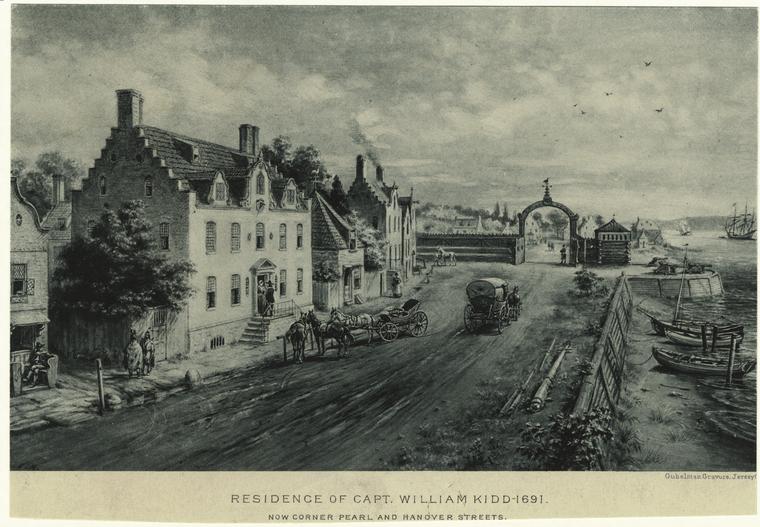
New York Residence of William Kidd and family
Another accounting, this one from: D.T. Valentine in his History of the City of New York, G.P. Putnam & Company, 1853.
“During the early years of the British colonial era, Great Britain was involved in a series of maritime wars with rival European powers. As part of this conflict, many leading New York City merchants operated as privateers or legally commissioned pirates whose ships attacked and looted Britain’s enemies.
“Benjamin Fletcher, the British governor of the colony, allowed the privateers open access to the port of New York in exchange for 100 Spanish dollars. The list of merchant pirates included Frederick Philipse, Nicholas Bayard (the son-in-law of Peter Stuyvesant), Stephanus Van Cortlandt and Peter Schuyler.
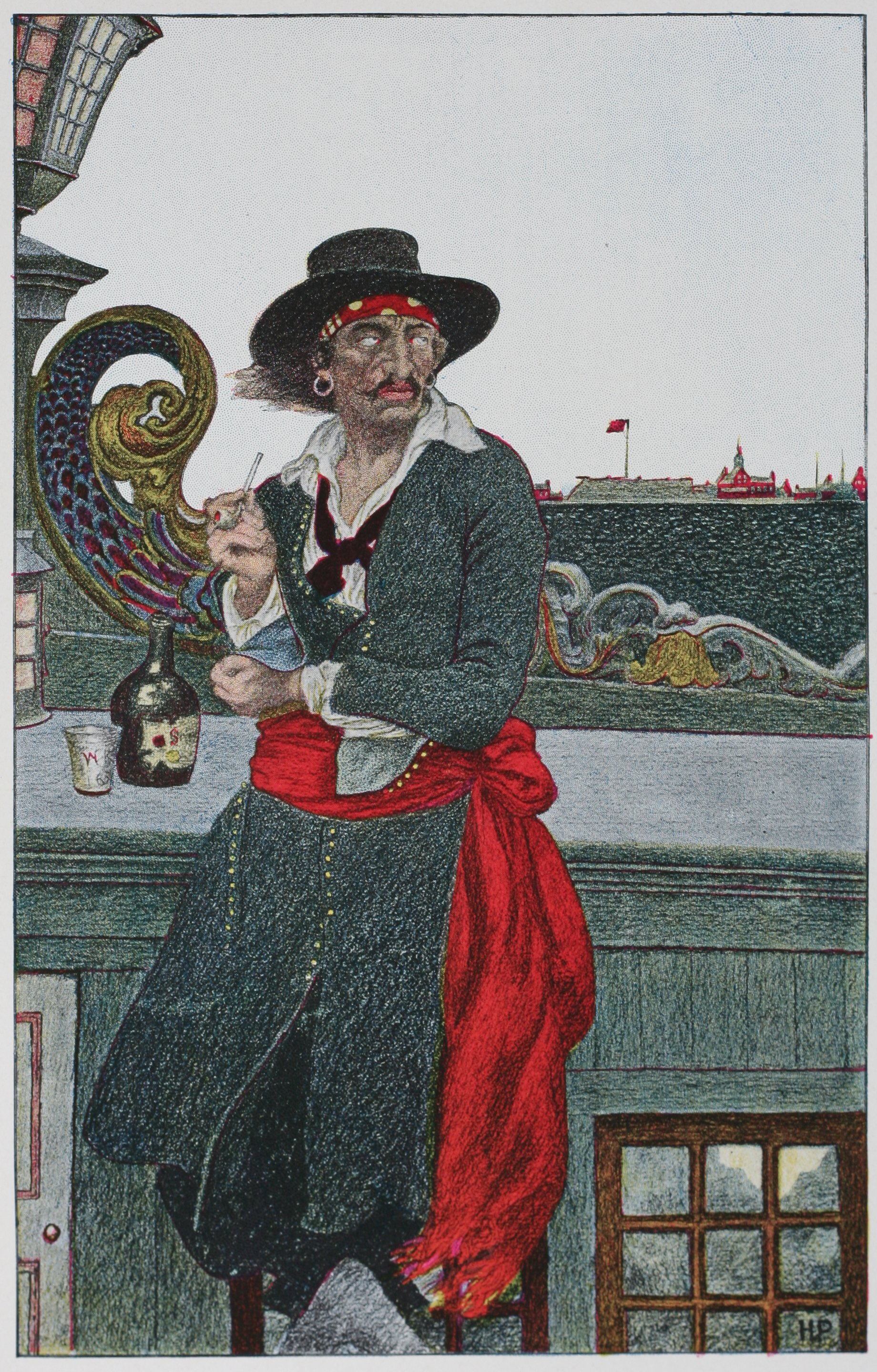
Kidd aboard his “Adventure Galley,” in New York Harbor, Howard Pyle
“Many also were involved in the slave trade. When war broke out between Britain and France in 1688, William Kidd received a commission as a privateer from a British official in the Caribbean. In 1691 he married a wealthy local widow, settled in New York City in a house on Wall Street, and contributed to the construction of Trinity Church. In 1695, Robert Livingston and members of the local elite including Governor Bellomont helped finance a pirating expedition by Kidd to the East coast of Africa. However, by the time Kidd returned to New York in 1699, he had been abandoned by his financial supporters. Kidd was arrested and sent to London where in 1701 he was executed as a pirate.
“The slave trade being a legitimate pursuit and followed as a regular branch of foreign trade for many years, both previous and subsequent to the period now referred to, was exceedingly profitable though somewhat hazardous owing to a piratical adventurers who followed them into their remote trading places and often, as in the instance above related, robbed them of their stores and money used in the purchase of the negroes. The practice became so great a pest that efforts were made by influential merchants to induce the English ministry to assist them in fitting out a cruising vessel, properly armed. . . .
“Col. Robert Livingston of New York, an active and influential citizen, brought this matter before the English Government and introduced Captain William Kidd of New York as an efficient and well-known commander, whose fitness for such service was well understood in New York. He was a man of family and had resided in this city for several years. It was proposed to engage in this enterprise on the footing of a private adventure, although it was desirable for some purposes that the scheme should receive the official countenance of the Government. The King, Lord Somers, the Earl of Romney, the Duke of Shrewsbury, the Earl of Oxford and Lord Bellamont joined in making up the necessary expenses of a proper vessel, Col. Livingston also contributing a proportion. The profits were to be divided among the owners of the ship, allowing a liberal share to Kidd.
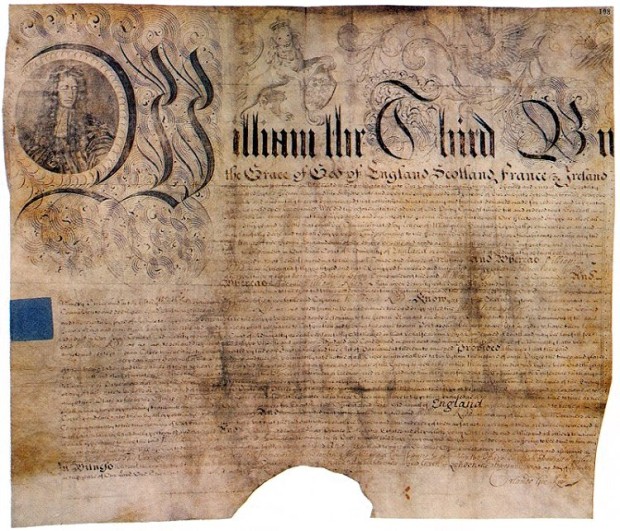
Letter of Marque, issued by King William III to Captain William Kidd in 1695
“A commission was issued December 11, 1695, under the great seal of England, directed ‘to the trusty and well beloved Captain William Kidd, commander of the ship Adventure Galley.’ He set sail from Plymouth in April, 1696, and arrived on the American coast, where he continued for some time, occasionally entering the harbor of New York and visiting his family in the city. He was considered useful in protecting our commerce, for which he received much applause, and the assembly of the province voted him the sum of two hundred and fifty pounds as a complimentary return for his services.
“Soon after he left this vicinity for more active operations on the coast of Africa and it was not long ere the astounding news arrived that Kidd had commenced the trade which he had been engaged to subvert and had committed several piracies.
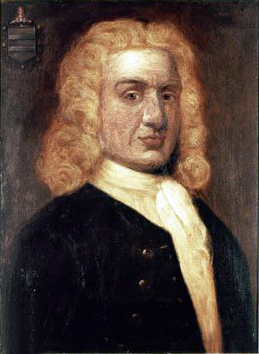
William Kidd, by Sir James Thornhill
“The report of these facts coming to the public knowledge in England, the circumstance was made the subject of a violent attack upon the Government by the opposition party, and in the excess of party zeal it was alleged that the King himself and those concerned in the expedition were privy to the piratical adventure and shares in its profits. This charge having some color of foundation from the actual circumstances of the case, made the question a subject of State inquiry, and thus the name of Kidd, though perhaps personally less obnoxious to the odious characteristics of his profession than many others in history became from its association with a partisan warfare between the great men of the State, the most famous among the pirates of the world. The noblemen engaged in the enterprise underwent the form of a trial for their lives, but were acquitted. The principal scenes of Kidd’s piracies were on the eastern coast of Africa, at Madagascar and the vicinity, where he captured and rifled several vessels, without, however, so far as we have been informed by history committing extreme cruelties upon his captives, the only person proven to have been killed by him being a seaman of his own named William Moore, whom he accidentally slew by hitting him with a bucket for insubordination.

Captain Kidd hanging in chains (gibbeted)
“Kidd having amassed a fortune by this cruise, shaped his course homeward, seeming with a strange fatuity to have supposed that no information of his depredations in those remote parts of the world had reached the scenes of his home. It brought his vessel into Long Island Sound in the year 1699 and went ashore at Gardiner’s Island, then owned and occupied by Mr. John Gardiner, to whom, from some undiscoverable motive, he made known his desire to bury a quantity of treasure on the island, and did, accordingly, deposit in the ground a considerable quantity of gold, silver and precious stones in the presence of Mr. Gardiner, but under strict injunctions of secrecy. This deposit consisted of eleven hundred and eleven ounces of coined silver, two thousand three hundred and fifty ounces of silver, seventeen ounces of jewels and precious stones, sixty-nine precious stones, fifty-seven bags of sugar, forty-one bales of merchandise, seventeen pieces of canvas, one large loadstone, etc.
“Having thus disburdened his ship, he departed for Boston, with the desire, it is supposed, of selling his vessel. While there, however, he was recognized in the street and apprehended. He was sent to England for trial and indicted for the murder of William Moore, before spoken of, and, being convicted, was hanged in chains at Execution Dock, May 12, 1701. The wife of Kidd continued her residence in this city after his death, herself and daughter living in seclusion in a habitation on the east side of the town.”
 gothamhistory